Sign in. It’s quick, free and it’s up to you.
An account is an optional way to support the work we do. Find out more.
Sign in. It’s quick, free and it’s up to you.
An account is an optional way to support the work we do. Find out more.
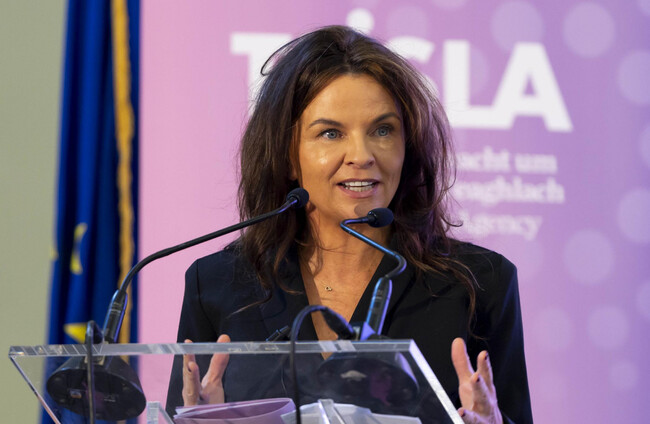
THE CHIEF EXECUTIVE of Tusla has said demand for secure accommodation for girls at risk of grooming and sexual exploitation is rising, as the Child and Family Agency was found in contempt of court for failing to place three children in such care.
Speaking to The Journal and another reporter at Tusla’s third annual Child Care and Law Conference, Duggan said the agency was facing growing challenges in providing secure care placements.
These are short-term, locked therapeutic residential services where children can be placed for up to three months.
Just 13 of the 26 special care beds available to Tusla are currently operational, with staff recruitment difficulties preventing the agency from opening additional places – including in cases where a judge has deemed secure care necessary.
“We’re increasingly seeing children who are being exploited, who are being groomed, who are experiencing complex mental health issues,” Kate Duggan said.
She added that increasingly there is a demand for secure care placements for children who haven’t been involved personally in criminality, but who are dealing with severe addiction and trauma-related issues, or who are themselves at risk of criminal exploitation.
“The last thing that we want is that a child is deprived of their liberty,” Duggan added, stressing that though “excellent” care is provided to those in secure placements in Ireland, that it is not always a long-term solution to problems that children face, which may be linked to triggering factors they will face again when re-entering the wider community.
Duggan said that Tusla representatives attended the High Court and presented evidence to show all the efforts being made by the agency to open additional secure placement beds.
“It’s a 24-hour, 365 day-a-year services.
“We need about seven staff members for every young person within special care, because that’s the intensity of the support that’s required,” she added.
Duggan added that as part of Tusla’s reform programme, it has introduced a new. IT system that means that court orders made in relation to a child are present on their file.
That development comes after an inquiry by Dublin District Court Judge Conor Fottrell revealed widespread failures by Tusla to comply with court orders concerning children in its care, including the completion of assessments, and the allocation of social workers.
The review found that 395 children were without an allocated social worker for more than four weeks, without Tusla notifying the court, as it is required to under the law.
The report identified 245 children who did not receive statutory child-in-care reviews within the required timeframe,, 79 whose foster placements had no allocated fostering link worker for more than four weeks, and 12 children in foster care who did not receive statutory social work visits.
Duggan said that when she was previously in the post of national director of services and integration she thought that a failure to comply with court orders related to small number of cases, but that the review revealed that the issue was widespread.
She explained that there is an onus on Tusla to go back to the court and notify the judge when an ordered cannot be fulfilled.
“We reviewed every case file to get an overview of any orders made, and today we can say that anything that should have been re-entered to the court [now has been],” she said.
Duggan also said that significant progress has been made since June of this year to bring special emergency arrangements – which are essentially unregulated and unregistered placements where children being brought into care are temporarily houses – under the governance of Tusla.
“If any provider across the State fails to meet registration, we take them under Tusla governance,” she said.
This means that these facilities will now be subject to inspections by the Health Information and Quality Authority (HIQA).
Duggan said that 30 different locations have been brought under Tusla’s governance this year.

To embed this post, copy the code below on your site














have your say